Form 1099-R Instructions & Tax Reporting Pointers

Form 1099-R is an IRS information return used by businesses and financial institutions to report designated distributions of $10 or more from retirement-related accounts, including pensions, annuities, IRAs, and profit-sharing plans. It captures both taxable and nontaxable distributions to ensure accurate reporting for the IRS and recipients. Typically issued by plan administrators, insurers, and employers, recipient copies are typically due by January 31 and must be e-filed with the IRS by March 31, with deadlines adjusted for weekends or holidays.
The 1099-R is used for each person to whom a business has made a designated distribution or are treated as having made a distribution of $10 or more from:
Amounts that are distributed from tax-exempt sources, such as workers' compensation and Department of Veterans Affairs payment, don't need to be reported. Also, if part of a distribution is taxable and part is nontaxable, the entire distribution should be reported.
Applicable businesses: Any organization that manages retirement plans and made designated distributions of $10 or more.
When to file: 1099-R forms must be mailed to recipients by January 31, and e-filed with the IRS by March 31 each year.
NOTE: When the due date falls on a weekend or legal holiday, the form due date is moved to the next business day.
Form 1099-R is used to report distributions from retirement plans such as 401(k), 403(b), and 457 plans, pensions, annuities, and similar accounts. This includes both taxable and non-taxable distributions that must be reported to the IRS and the recipient.
Financial institutions, plan administrators, and other entities that distribute retirement funds are responsible for issuing Form 1099-R. They must report the distribution details to both the IRS and the recipient to ensure accurate tax reporting.
Form 1099-R includes fields to distinguish between the total distribution amount and the taxable portion. Accurate reporting is critical, as this determines how the recipient reports the distribution on their individual income tax return.
Common risks include incorrect coding of distribution types, reporting inaccurate taxable amounts, and classifying rollovers improperly. These errors can lead to IRS mismatches, corrections, or penalties.
Tax professionals can improve accuracy by validating distribution codes, confirming withholding amounts, and reviewing supporting documentation for each transaction. Consistent review processes help reduce corrections and compliance issues.
Updated: 07/28/2026
Need to make a correction? No problem! Here's how you can get started with 1099 corrections.
Review important W-2 requirements for employee filing.
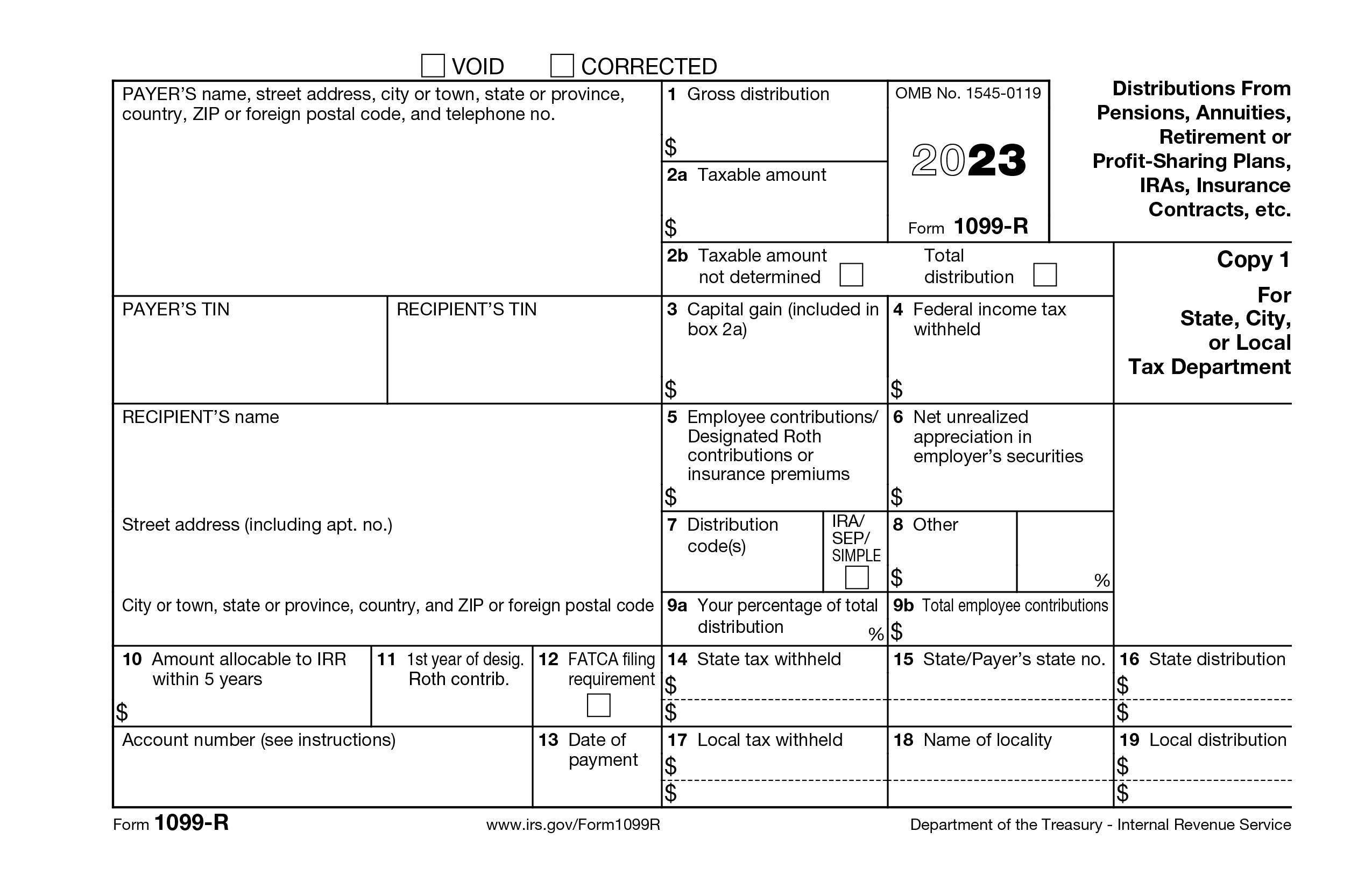
Who: Any organization that manages retirement plans and made designated distributions of $10 or more
When: 1099-R forms must be mailed to recipients by January 31, and e-filed with the IRS by March 31 each year
Where: To the IRS
Why: To report designated distribution of $10 or more from a retirement account
Free to try.
You only pay when you're ready to file.