Form 1099-S Instructions & Tax Reporting Pointers

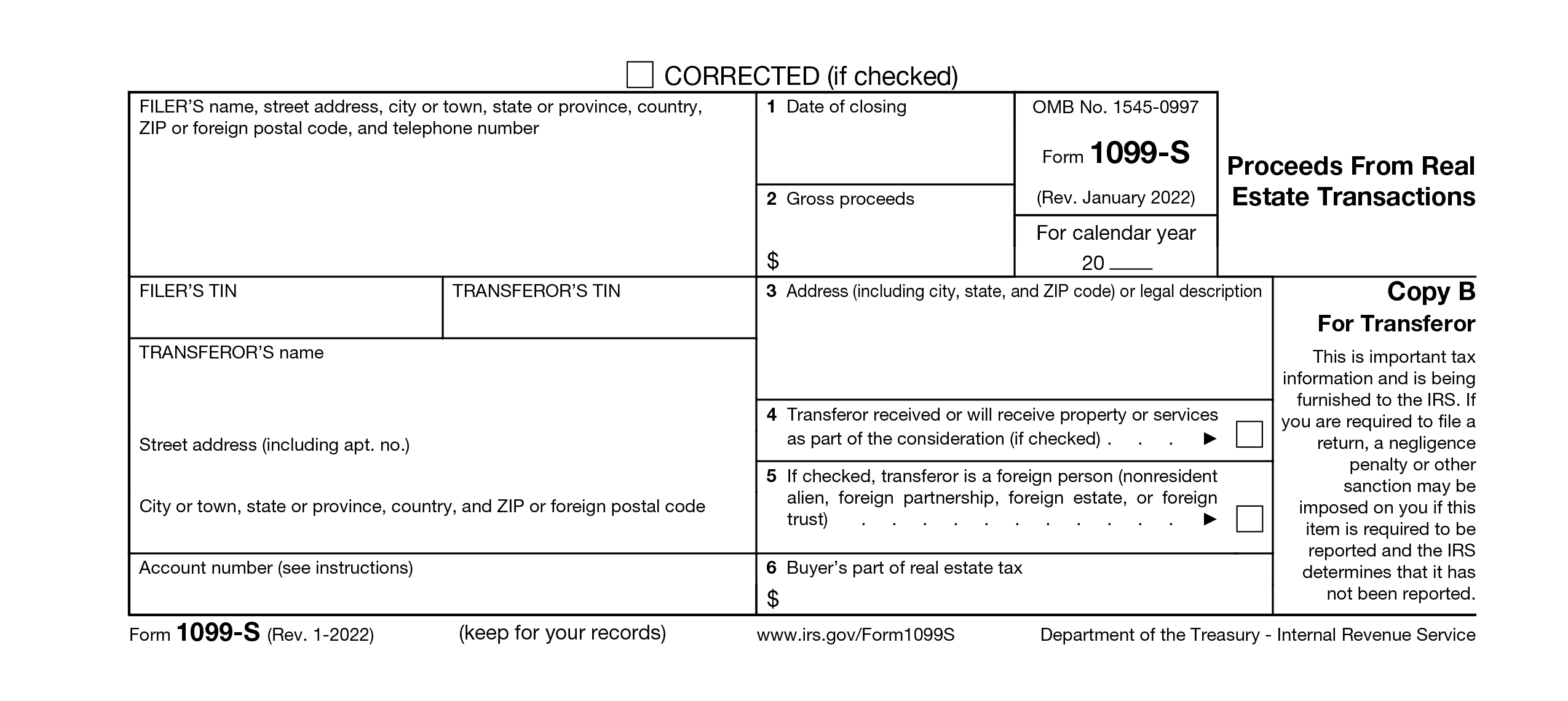
Form 1099-S is an IRS information return used to report gross proceeds from real estate transactions, including the sale or exchange of land, homes, and commercial property. Typically filed by the settlement agent, title company, or closing attorney, it ensures both the IRS and the seller have accurate records of the transaction. Unlike many 1099 forms, there is generally no minimum reporting threshold. To maintain compliance and avoid penalties, recipient copies are typically due by February 15 and must be filed with the IRS by March 31, with deadlines adjusted for weekends or holidays.
The 1099-S is used to report the gross proceeds from the sale or exchange of real estate and certain royalty payments. This includes transactions that consist of sale or exchange for money, indebtedness, property, or services of any present or future ownership interest in:
Applicable businesses: Real estate brokers, banks, real estate agents, escrow companies, title companies, real estate lawyers and attorneys for property transactions.
When to file: 1099-S forms must be mailed to recipients by February 15 and e-filed with the IRS by March 31 each year.
NOTE: When the due date falls on a weekend or legal holiday, the form due date is moved to the next business day.
Form 1099-S is used to report proceeds from real estate transactions, including the sale or exchange of real property such as land, residential properties, and commercial buildings. These transactions must be reported to the IRS to ensure proper income tracking.
The responsibility typically falls on the party designated as the reporting person in the transaction, such as settlement agents, title companies, lenders, or attorneys involved in the closing process. Clear reporting responsibility should be established at closing.
Form 1099-S requires details such as the gross proceeds from the sale, property address, closing date, and the seller’s taxpayer identification information. Accurate documentation is critical for ensuring compliance with IRS reporting requirements.
Yes, certain transactions may be exempt from reporting, such as qualifying sales of a primary residence that meet IRS exclusion criteria or transactions involving exempt entities. Determining eligibility for exemption is an important compliance step.
Common risks include failing to properly identify reportable transactions, incorrect payer or seller information, and missing required documentation at closing. These issues can lead to reporting errors, corrections, or IRS penalties.
Updated: 07/28/2026
Who: Real estate brokers and other professionals involved in property transactions
When: 1099-S forms must be mailed to recipients by February 15 and e-filed with the IRS by March 31
Where: To the IRS
Why: To report the proceeds from the sale or exchange of real estate and certain royalty payments
Free to try.
You only pay when you're ready to file.